Humans and chimpanzees last shared an ancestor roughly 6–8 million years ago and are genetically closer to each other than either is to any other ape. However, natural selection has produced stark differences: human brains are three times larger, we're obligate bipeds, we have symbolic language and cumulative culture, and we mature far more slowly than our primate cousins.
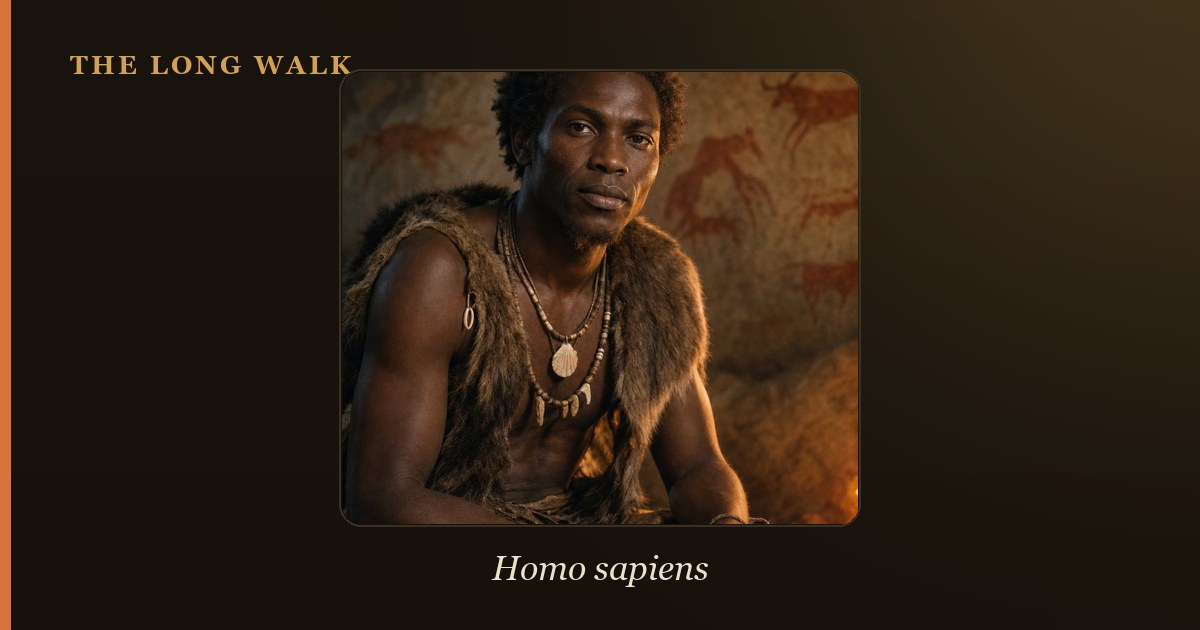
When headlines announce that humans and chimpanzees share 98.8% of their DNA, the immediate reaction is often confusion: if we're nearly identical, why are we so different? The answer lies in understanding what genetic similarity actually measures, and then recognizing that even tiny percentages of change, applied over millions of years of evolution, can produce radical shifts in anatomy, brain organization, and behavior.
Chimpanzees (Pan troglodytes) and bonobos (Pan paniscus) are unequivocally our closest living relatives. The human-chimp last common ancestor lived somewhere between 6 and 8 million years ago—recent in evolutionary terms, but long enough for the two lineages to accumulate significant differences. To grasp just how different we've become, it helps to know what we inherited together, what we've changed, and why those changes matter far more than the percentage of DNA we share.
| Feature | Humans | Chimpanzees |
|---|---|---|
| Brain volume | ~1,350 cubic centimeters | ~380 cubic centimeters |
| Chromosomes | 23 pairs (46 total) | 24 pairs (48 total) |
| DNA sequence divergence | 98.8% identical at single bases | ~1.2% single-base differences |
| Primary locomotion | Obligate bipedalism (two legs) | Knuckle-walking (quadrupedal) |
| Typical lifespan (wild) | ~70–80 years | ~35–40 years |
| Symbolic language | Full grammar, unlimited vocabulary | Vocalizations and gestures; no grammar |
| Cumulative culture | Knowledge compounds across generations | Tool use; local traditions; limited innovation |
How Closely Related Are We?
DNA evidence is unambiguous: humans and chimpanzees form a clade—a branch of the primate tree that excludes all other living apes. If you plot the genetic distances between all great apes, humans and chimps cluster together more tightly than either does with gorillas or orangutans. We're more closely related to chimpanzees than chimpanzees are to gorillas, a fact that stunned biologists when molecular genetics first revealed it in the 1960s and 70s.
This kinship is not metaphorical; it's inscribed in our genomes. Large stretches of human and chimpanzee chromosomes can be aligned base-by-base, and the vast majority of genes perform similar jobs in both species. If you sampled 1,000 random DNA bases from a human and matched them to the same region in a chimp, roughly 988 would be identical. It's this figure—98.8%—that dominates popular science coverage and tends to overshadow the crucial details.
What the 98.8% Really Means
The 98.8% figure refers specifically to single-nucleotide identity in aligned sequences. When geneticists compare a human base pair to the corresponding chimp base pair, about 98.8% of the time they're the same. But this metric hides as much as it reveals. First, it counts only positions where both genomes can be directly aligned—straightforward comparisons at the same genomic address.
When you include insertions and deletions (called indels)—places where one genome has extra DNA that the other lacks—the overall sequence difference climbs to around 4%. Humans and chimps have about 40 million bases of sequence difference in total, and roughly 1.23% of the human genome consists of bases that have no match in the chimp genome at all. In absolute terms, that's roughly 35 to 40 million nucleotides that differ between the two species. Evolution also works through changes in gene regulation, expression timing, and chromosome structure—differences that don't always show up in straightforward base-pair counts but profoundly affect how organisms develop.
The Chromosome 2 Fusion: A Smoking Gun for Shared Ancestry
One of the most elegant pieces of evidence for human-chimp kinship is also one of the most visible: human chromosome 2, which doesn't exist in chimpanzees. Instead, chimps have two separate chromosomes (labeled 2A and 2B) that correspond to pieces of the human chromosome. This isn't coincidence; it's a fossil written in our DNA.
In the human lineage, roughly 4 to 6 million years ago, two ancestral ape chromosomes fused end-to-end. You can still see the scars of the fusion in the human genome: at the junction site, DNA sequences that normally cap the ends of chromosomes (called telomeres) appear in the middle of the chromosome, exactly where you'd expect them if two separate chromosomes had been welded together. This signature is so clear that it stands as one of the strongest molecular clues that humans and other apes share a common ancestor — the telltale scar of two chromosomes that merged into one along the human line.
Bodies Built for Different Lives
Despite our genetic similarity, human and chimpanzee bodies are specialized for entirely different modes of life. Humans are obligate bipeds—we've sacrificed tree-climbing prowess and upper-body agility to excel at sustained walking and running on open ground. Our spine curves in an S-shape; our pelvis is broad and bowl-shaped to support upright posture and larger babies; our feet have a rigid arch and a non-opposable big toe that acts as a lever for pushing off the ground.
Chimpanzees are powerful knuckle-walkers with long, muscular arms suited to climbing and brachiation (swinging through trees). Their feet are grasping organs with a mobile big toe, perfect for gripping branches. Pound for pound, chimpanzees are far stronger than humans—an adult chimp can be four or five times as powerful as a human of comparable weight. Yet they're less efficient at traveling long distances on the ground, and they can't throw objects with the precision and force that bipedal shoulders and a reorganized arm skeleton allow. The shift to bipedalism was one of the first great turning points in human evolution, opening the door to tool use and eventually to the cognitive leaps that define our species.
Brains, Language, and Culture
The most striking difference between humans and chimpanzees is brain size and organization. A human brain weighs roughly 1,350 grams and occupies about 1,350 cubic centimeters; a chimpanzee brain averages around 380 cubic centimeters—nearly 3.5 times smaller. But volume alone doesn't tell the whole story. Humans have a vastly expanded prefrontal cortex and association areas, the regions responsible for planning, language, abstract reasoning, and social theory-of-mind. Chimpanzees have language-related circuitry, but it's rudimentary compared to ours. The human gene FOXP2, which plays a role in language development, carries two amino-acid changes relative to the chimp version—tiny tweaks that seem to underpin our capacity for hierarchical grammar. You can spin the FOXP2 protein in our 3D protein viewer.
This neural expansion enables human symbolic language: we can talk about things that aren't present, share ideas across generations, and build cumulative culture. Chimpanzees are intelligent—they use termites to fish for termites and rocks to crack nuts, they have local traditions and teach these behaviors to the young, and they navigate complex social hierarchies. But they don't have the machinery for the kind of open-ended, generative language that lets humans describe an infinite universe of meanings with a finite set of words. That difference, multiplied across the millennia, is what separates a species that invents tools and forgets them from one that invents tools and builds on them forever.
Life History and Childhood
Humans have a longer, slower developmental arc than any other ape. A human child takes roughly 15 to 20 years to reach full maturity; a chimpanzee is sexually mature by 12 to 13 and has largely finished growing by the mid-teens. Humans are also the only ape where females undergo menopause—the permanent cessation of reproduction—in midlife. This is thought to reflect the "grandmother hypothesis": post-menopausal women were able to increase their inclusive fitness by investing in grandchildren rather than having more of their own.
Our extended childhood is a mixed blessing. It makes us vulnerable for years and demands enormous parental investment, yet it creates a window for learning and cultural transmission. A young human has more time to absorb the knowledge, language, and behaviors of their community. We're not born with a complete behavioral repertoire; we're born unfinished, shaped by experience and teaching in ways that a young chimpanzee, with its shorter window, simply cannot match.
What Makes Humans Human?
The comparison between humans and chimpanzees ultimately raises the question: if we're so genetically similar, what makes us different? The answer is that evolution doesn't work on single genes or single percentages; it works on systems. Bipedalism selected for a certain pelvis shape, which constrained how big babies could be, which prolonged childhood, which created space for cumulative culture. A larger brain with expanded prefrontal cortex enabled planning and language; language enabled cooperation at scale; cooperation enabled the transmission of knowledge; knowledge compounds, and within a handful of millennia, humans went from stone tools to cities to space travel.
Chimpanzees are our evolutionary cousins, sharing an ancestor with us and inheriting much of the same genetic toolkit. But over the last 6 to 8 million years, the human and chimp lineages have taken radically divergent paths. We're more like them than we are like any other mammal—yet in the ways that matter most, we've become something altogether different. Understanding both the similarity and the difference is essential to grasping who we are and where we came from. For a deeper dive into our own species' place in the hominid family tree, explore our guide to Homo sapiens.
Trace where the human and chimpanzee lineages split from a common ancestor on the interactive deep-time tree.
Explore the family tree →Frequently asked questions
How Closely Related Are We?
Chimpanzees and bonobos are our closest living relatives. Genetic comparisons group humans and chimpanzees together, more closely than either is to gorillas or orangutans.
What Makes Humans Human?
No single gene. The differences come from changes in how many genes are regulated and work together, which shape our brain growth, upright skeleton, language and culture.
- The Chimpanzee Sequencing and Analysis Consortium (2005). 'Initial sequence of the chimpanzee genome and comparison with the human genome.' Nature 437. nature.com
- Smithsonian Human Origins — Genetics. humanorigins.si.edu
- Britannica — Human evolution. britannica.com